
Water Leak Detection · Lynn

Water Leak Detection in Lynn, MA

A hidden leak can soak a wall for weeks before you ever see a stain. We find the source fast, so the damage stops where it started. Call our Lynn crew and we will track it down today.

Free Quote

Free Water Leak Detection quote.

We reply within 1 business hour. No spam, ever.

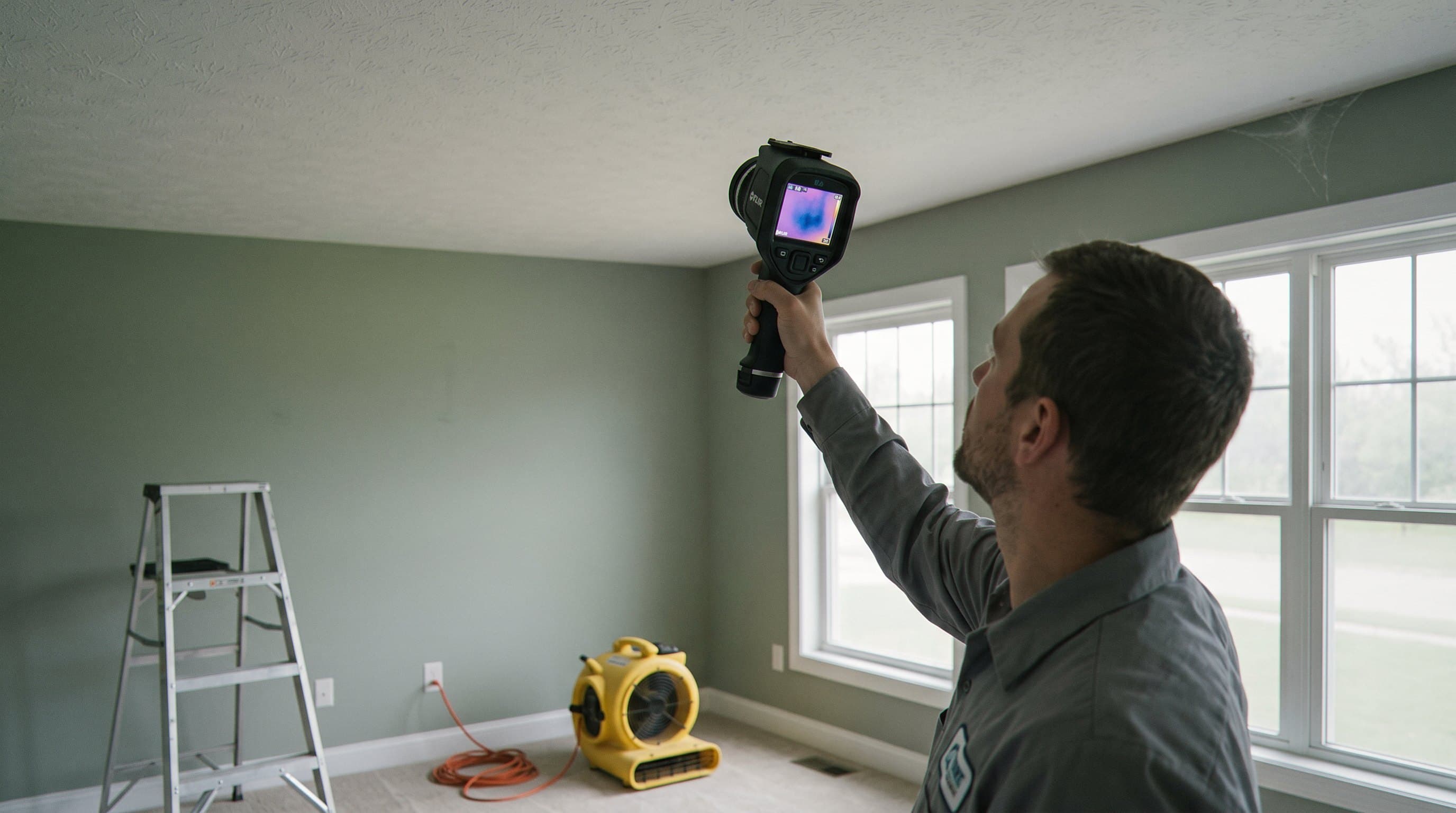
Technician using thermal imaging camera
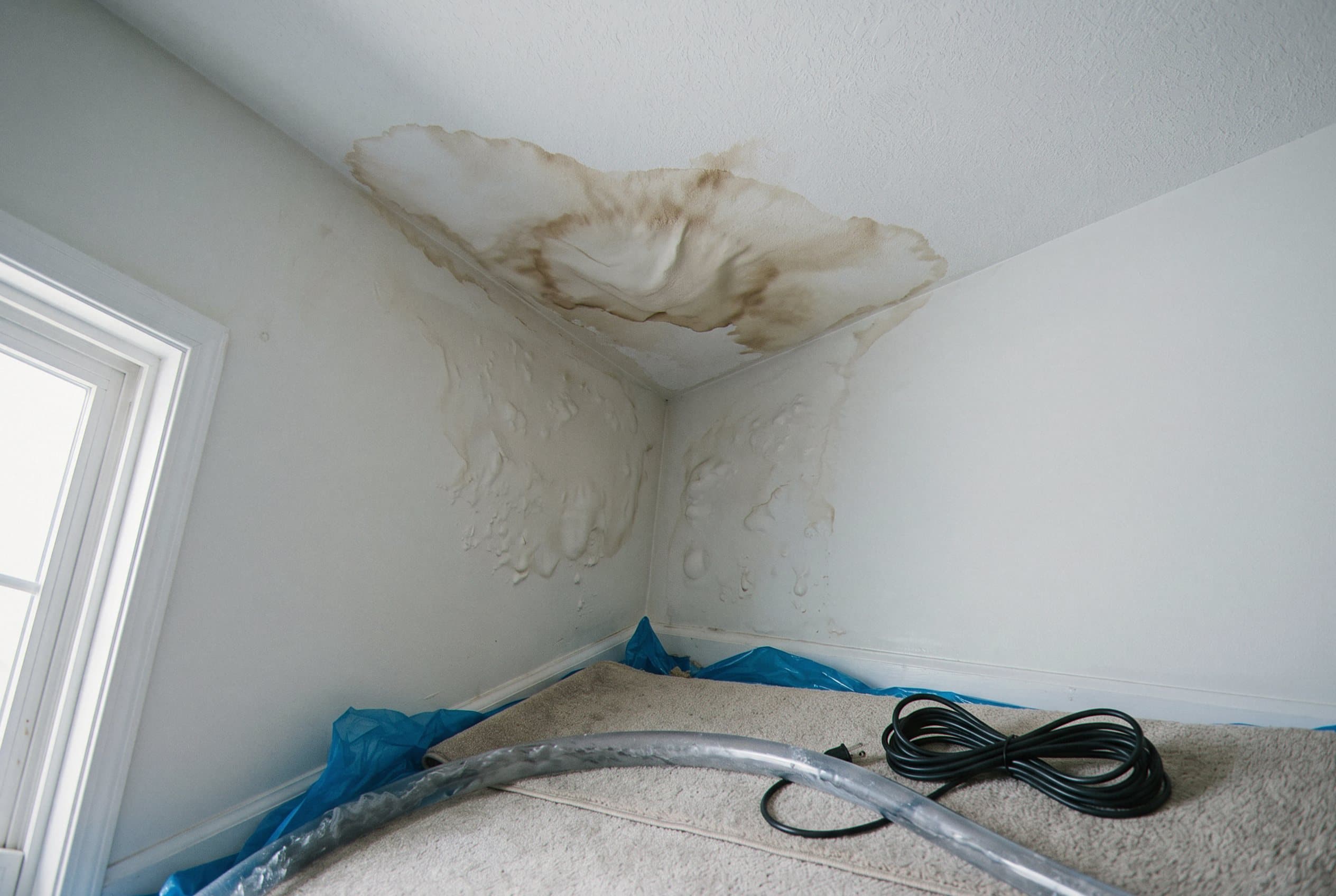
Musty basement showing hidden water damage
Thermal imaging revealing cold leak area
What we do

How we find a hidden leak in your Lynn home.

Most leaks in Lynn homes stay out of sight. Water travels down a stud, pools under a floor, or wicks into drywall while the surface still looks dry. By the time a brown ring shows on the ceiling, the wood behind it has been wet for days. We come in before the guessing starts. Our crew reads the clues a house gives up: the soft spot in a floor, the musty smell near a closet, the warm patch on a wall where a hot line runs, the meter that keeps ticking with every faucet shut off. Then we confirm the exact spot, so nobody opens a wall on a hunch. That one step saves you the cost of a repair you did not need and the mess of a hole cut in the wrong place.

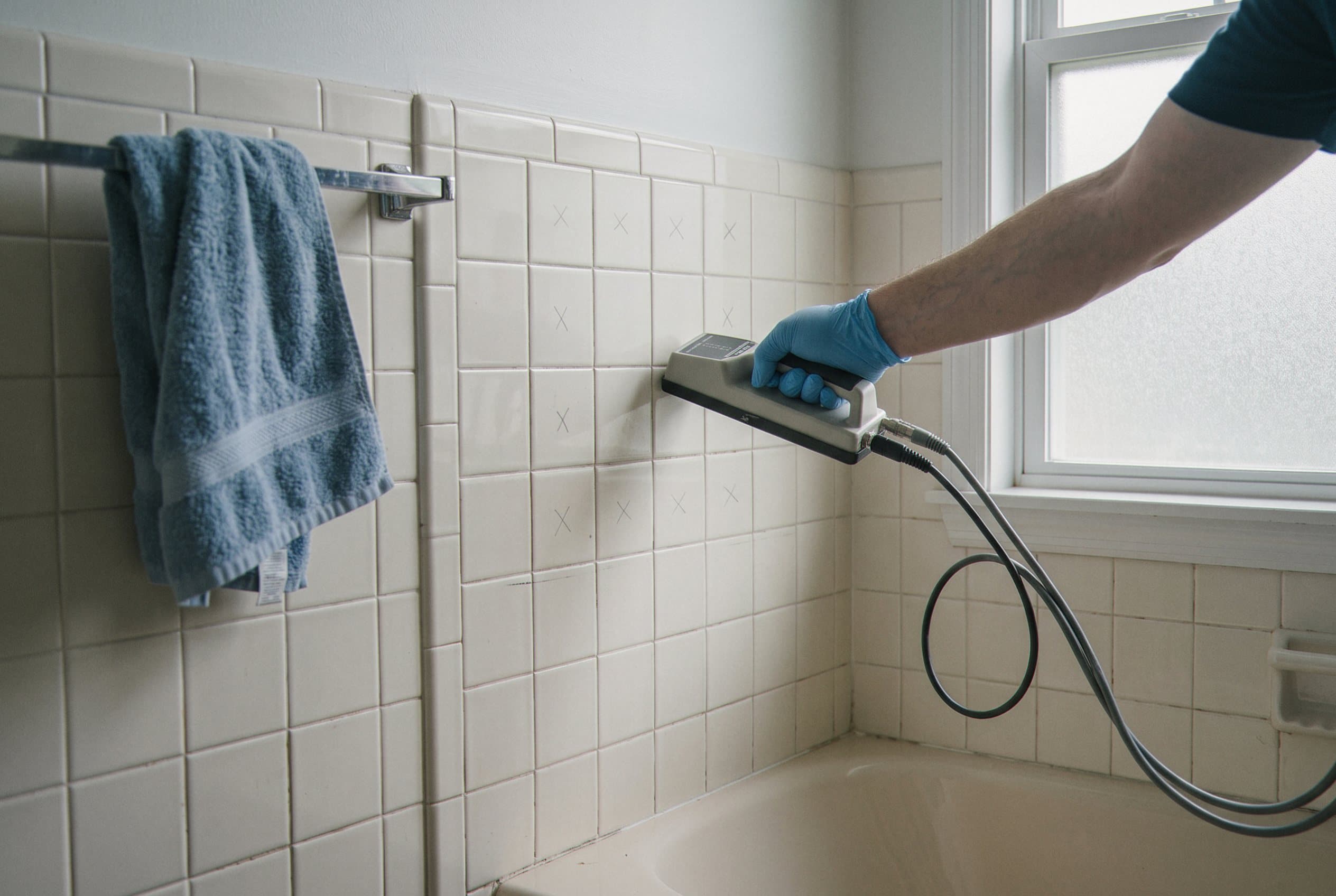
We use tools that see what eyes cannot. A moisture meter maps how far the water has spread inside a wall. A thermal camera shows the cold trail a leak leaves behind the paint. Acoustic gear lets us hear water moving through a pressurized pipe, even under a slab or behind tile. We pair that with simple checks, like watching your water meter while every fixture sits closed. When the dial still creeps, we know water is escaping somewhere. From there we narrow it down room by room until we stand right on top of it. No demolition to start. We open only the spot the readings point to, and not an inch more than the job needs.

  • We pinpoint the leak before any wall comes open. The repair stays small, and the mess stays where you can see it instead of spreading inside the framing.
  • Thermal and moisture mapping shows the full reach of the water inside the wall, not just the wet spot you happen to see on the surface.
  • Acoustic listening finds pipe leaks under slabs, tile, and concrete. The floor stays whole while we hunt.
  • We check supply lines, drains, water heaters, and every fixture in the home. We find the real source, not a symptom.
  • Same day response across Lynn and the nearby Essex County towns. A slow leak only does more harm the longer it sits behind the wall.
Find the leak first. The repair, the drying, the patch, all of it gets easier once you know exactly where the water is coming from.

Lynn has a lot of older housing stock. Walk from the triple deckers near downtown up toward Wyoma and the Diamond District and you pass a century of plumbing that nobody has touched, supply lines and shutoff valves and water heaters that all fail in their own quiet way. A pinhole in a copper line can run for a month. You would never hear it. We have traced leaks behind finished basements, under kitchen islands, and inside the shared wall between two bathrooms where the water could have come from either side. Once we find it, we mark the spot and explain what we see in plain words. Then we lay out the fix. If the leak already soaked into drywall or subfloor, our crew dries it out and handles the cleanup too, so the whole job stays with one team from the first knock to the last patch.

If your water bill jumped, a wall feels damp, or you hear a faint drip with the house gone quiet, do not wait for the stain to spread. Call us. Our Lynn crew will track the leak to its source, mark it, and tell you straight what it takes to stop it. The sooner we find it, the less of your home the water gets to touch.
Materials

The gear we bring on a Lynn leak call.

Leak work is only as good as the gear behind it. We load the truck for the whole range of trouble a Lynn house can hand us. A moisture meter reads the water sitting inside drywall, plaster, and wood, and it hands us a number instead of a guess. A thermal camera reads temperature, so the cold trail behind paint shows up as a dark streak on the screen. Acoustic gear picks up the hiss of water pushing through a crack in a line that still holds pressure, even down through a slab. We carry pressure test kits for supply lines, tracer gas for the stubborn ones, and a borescope so we can look inside a wall cavity through a hole the size of a dime. None of it is magic. It just turns a hunch into a spot we can point at.

Older homes here ask for a light touch, and the gear lets us give it. Plaster and lath does not read the way drywall reads, so we take extra numbers and check them against each other before we call it. Tile, hardwood, and finished basement paneling each hide water in their own way. We work from the wet edge back toward the source, mapping as we go, and we mark the wall with tape so you can see the shape of the problem too. If the readings point under a slab or behind a tub, we say so before anyone picks up a saw. We would rather spend an extra hour listening than cut a hole in a finished room for nothing. When the source sits outside, in a buried line or a hose bib that split over the winter, we chase it out there as well.

  • Moisture meter. Reads how wet a wall really is, in numbers we can track from room to room.
  • Thermal camera. Shows the cold path water leaves behind plaster and paint, without a single cut.
  • Acoustic listening. Hears water moving inside a pressurized pipe under tile, slab, or a poured floor.
  • Borescope. Lets us look inside a wall cavity through a hole no wider than a coin.
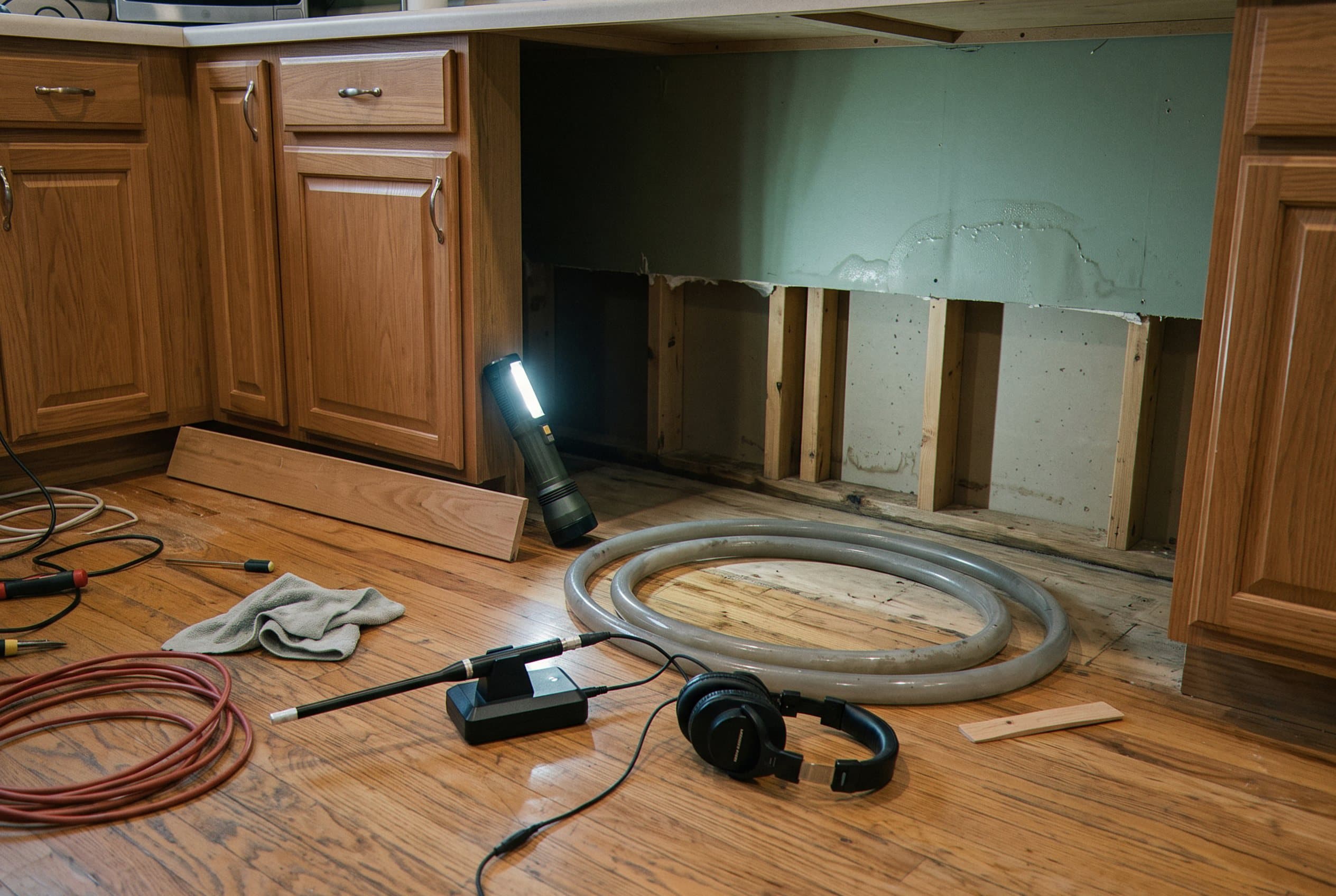
Moisture meter and thermal camera tools
Technician investigating wall cavity for moisture
What about the alternatives?

Ways to hunt a leak, and what each one is worth.

Most people try a couple of these before they call anyone. Some are worth your Saturday morning. Some cost you a wall. Here is how we rank the common ways to go after water you cannot see, based on what we walk into on real calls around the city.

Full trace with meter, thermal, and acoustic tools

This is the one that ends the guessing. We map the moisture, read the temperature trail, and listen to the line until every reading agrees on one spot. Nothing gets opened until we know where the water is.

Recommended

Water meter shutoff test

Close every fixture in the house, then watch the dial. If it still creeps, water is escaping on your side of the meter. It is a solid first clue. It never tells you which room or which pipe.

Acceptable

Dye tablets in the toilet tank

Cheap, easy, and it does catch a flapper that runs all night. It covers one fixture though. A wet ceiling under the bathroom can still be coming from the drain, the supply, or the shower pan.

Acceptable

Pressure test on the supply line

Isolate the line, hold pressure, and watch whether it drops. That confirms the leak sits on the side that stays under pressure. It narrows the hunt for us, though it never marks the exact spot.

Acceptable

Opening walls to look around

Here is where a small problem turns expensive. Every hole in the wrong place means drywall, tape, texture, and paint you pay for twice, and the water keeps running the whole time you patch.

Skip

Waiting to see if the stain spreads

The stain always spreads. While you watch it, framing behind it stays wet, insulation packs down flat, and mold gets the dark damp corner it has been waiting for. Waiting only grows the job.

Skip
How it goes

From quote to walk-on, fast.

01

Inspect and assess

02

Extract the water

03

Dry and dehumidify

04

Clean and restore

Before you book

Straight answers before we come out.

We field the same questions on almost every leak call. Here are the honest answers, the same ones we would give a neighbor standing in their own kitchen.

Do you have to cut open my wall to find the leak?
No. We start with tools that read through the surface, so most of the work happens with your wall still intact. If we do open something, it is one small square at the spot every reading agrees on. We show you those numbers first and explain why that spot and not another.
My bill jumped but I see no wet spot. Is that still a leak?
Often it is. Water takes the easy path, and that path can run down a stud into the sill plate or out under a slab where nothing shows on the surface. A meter that keeps moving with the house quiet is worth a call even when every ceiling in the place looks clean.
Can you find a leak under a concrete slab?
Yes. Slab work is what the acoustic gear is built for. We listen along the run, compare what we hear at several points, and mark the loudest one. Thermal helps here too, because a hot water line under a floor gives away its own position.
How long does a detection visit take?
Most homes take a couple of hours. Small and simple can go quicker than that. A large house, a finished basement, or more than one suspect source takes longer, and we would rather spend the time than hand you the wrong answer and walk out.
The ceiling stain dried out on its own. Should I still call?
Call us. A stain that dries usually means the leak is slow, or it comes and goes, like a shower pan that only lets water out when someone is in there. The wood above stays damp long enough to rot, and the source has not gone anywhere.
What if the leak is on the city side of the meter?
Then we tell you that plainly and point you to the right office, because that stretch of pipe is not yours to fix. Knowing which side of the meter your water leaves from still saves you from tearing into a floor for nothing.
Aftercare

Simple habits that catch a Lynn leak early.

Most of the leaks we chase gave a warning first. A small stain that kept coming back. A meter that moved while nobody was home. A washer hose that felt stiff and crusted at the collar. Winter here puts real stress on plumbing, and a cold snap that freezes an exposed line in a crawl space or an unheated porch tends to show itself as a burst on the first warm afternoon. A few minutes of looking, once a season, catches most of it. Walk the house. Open the cabinet under every sink and put a hand at the back where you cannot see. Look at the floor around the water heater. If something feels damp or smells stale, trust that and call us.

  • Read your water meter with every faucet, toilet, and appliance off. Come back an hour later. Any movement at all means water is going somewhere it should not.
  • Check under the kitchen and bath sinks each season. Run a hand along the back of the cabinet, where a slow drip likes to hide behind the trash can.
  • Look over the supply hoses on your washer. Rubber goes stiff and cracks with age, and a hose that lets go can push a lot of water into a floor in minutes.
  • Watch the pan and the floor around your water heater. Rust streaks, a damp ring, or a crusted fitting all say the tank is telling on itself.
  • Before the first hard freeze, shut off and drain the outside spigots, then wrap any pipe running through a crawl space, garage, or unheated porch.
  • Keep an eye on the bill. A month that jumps with no house full of guests to explain it is one of the clearest signs of a leak nobody has spotted yet.
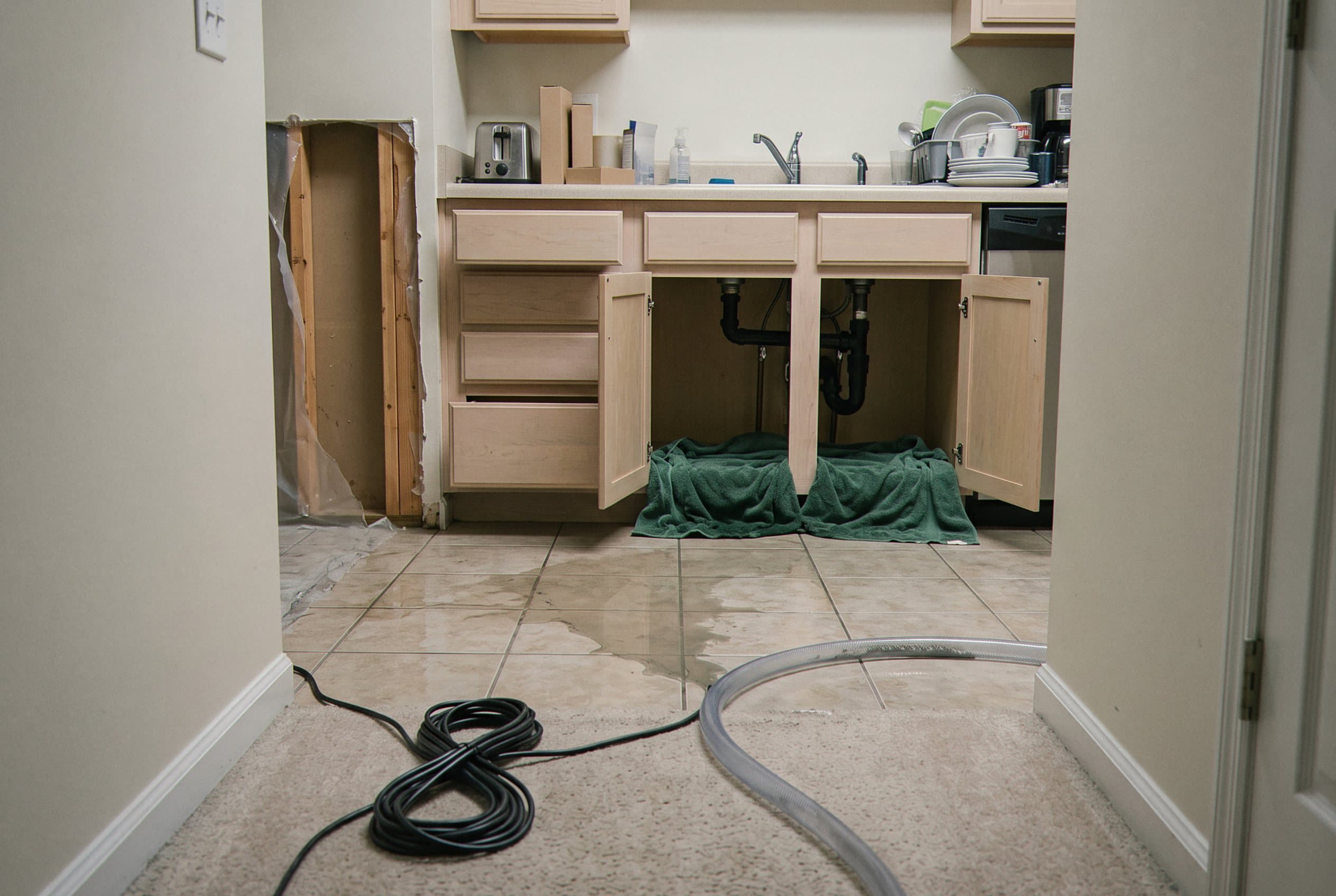
Kitchen area with water staining
FAQ

Water leak detection questions from Lynn homeowners.

How fast can you get to my Lynn home?
Our line is open around the clock, including through a storm when everyone calls at once. Rather than promise a minute count that a nor'easter would make meaningless, we tell you where the crew is coming from and when they are rolling, and we walk you through shutting things down while you wait.
What should I do before you get here?
Find the main shutoff and close it if you can do that without standing in water. Keep away from the panel and from anything plugged in low to the floor. Photograph the rooms before you move anything, then start lifting what you can off the wet floor, because furniture legs stain carpet and pad within hours.
Will you deal with my insurance company?
We write the file the way an adjuster reads it. Daily moisture logs, photographs of each affected room, and a scope that says what was removed and why. We speak with your adjuster directly. Coverage itself is your carrier's call, and we will never tell you a claim is covered when we do not know that.
How long will the equipment be running?
Three to five days covers most of what we see. Old plaster, and the fieldstone foundations under a lot of Lynn's older houses, hold moisture longer than modern framing does, so those can run a day or two past that. We read the material every day against the IICRC dry standard, and the readings decide when we pull out.
Am I going to end up with mold?
Wet material left alone starts growing in roughly 24 to 48 hours. That window is the entire reason we care about getting there the same day rather than the next morning. Dried properly and quickly, most losses never develop it at all.
Ready when you are

Water in your Lynn home?

Call now or send the form. We answer fast and tell you exactly what happens next.

Get a free quoteCall (339) 500-6770
CallFree Quote